Seasonal food teaching · Four-day menu

Eating with the autumn equinox

Twelve warm, practical recipes using ingredients found in European markets. Explore one day at a time, from breakfast to a light evening meal.

Download the 12 recipe cards (PDF)
Warm apple and almond millet porridge

Qiu Fen at the table

At the autumn equinox, traditional Chinese food teaching considers balance between yin and yang. These recipes use cooked fruits, grains, roots and vegetables to explore gentle warmth, moisture and lightness in seasonal meals.

Each recipe serves two. Read the “Check before serving” note for allergies, food sensitivities and medication considerations. Traditional TCM food functions describe a teaching framework, not treatment claims.

01 / 04

Day 1

Breakfast · Lunch · Light dinner

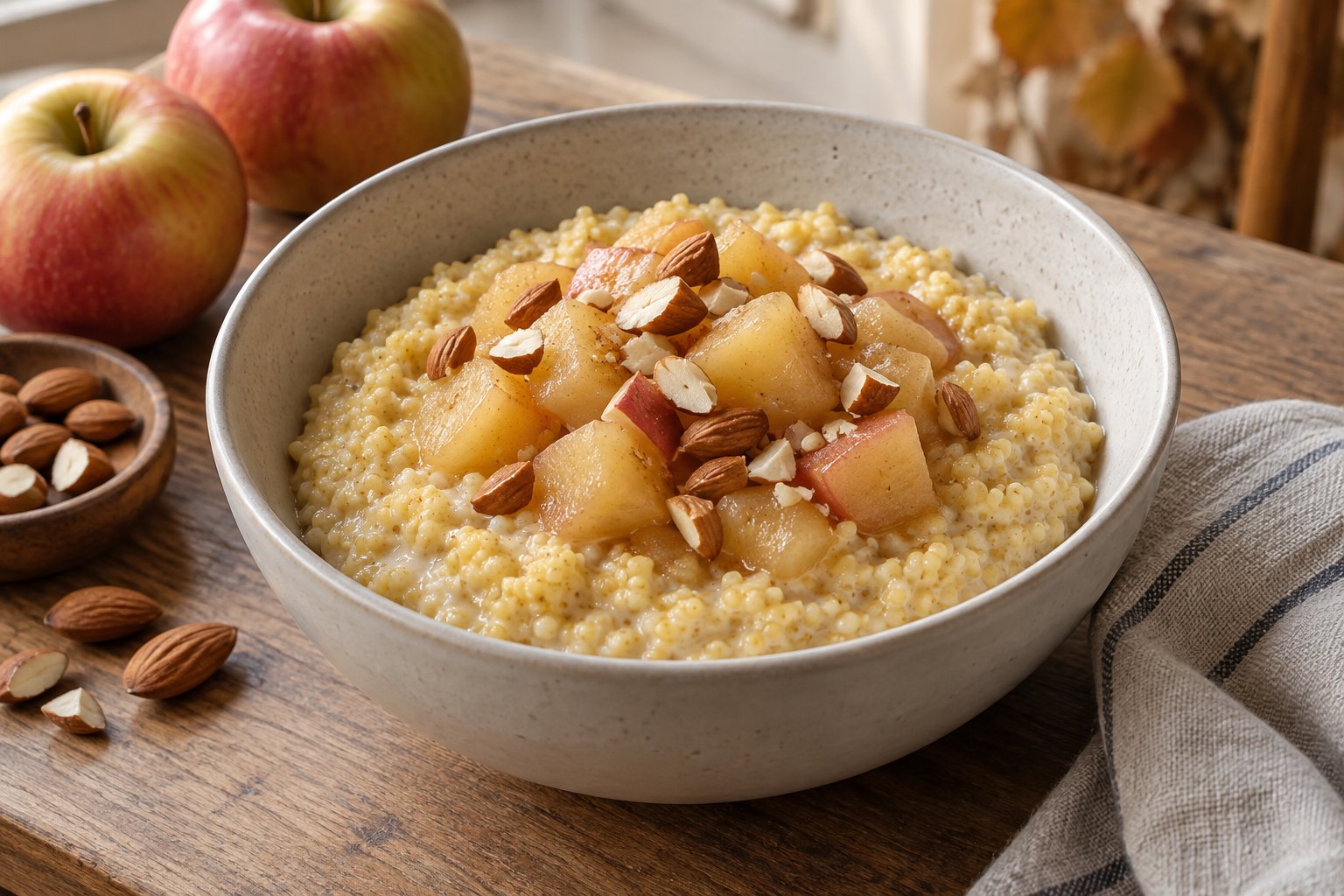
Finished dish: Apple & Almond Millet Porridge
Day 1 · Breakfast · 25 min + optional soak

Apple & Almond Millet Porridge

Traditional TCM food functionCooked apple and warm millet offer a gentle start. In seasonal TCM teaching, warm preparations balance the cooler character of fruit.

Ingredients & method

Ingredients for 2

  • 100 g millet
  • 2 apples, cored and diced
  • 25 g sweet almonds, chopped
  • 700 ml water

Method

  1. Rinse millet well. For softer texture, soak in 300 ml of the measured water overnight in the refrigerator.
  2. Simmer apples in 100 ml water for 10-12 minutes. Cook millet with its soaking water and the remaining 300 ml water for 20-25 minutes, until tender.
  3. Serve the warm millet with soft apples and chopped almonds.
Check before serving

Avoid for almond allergy. Apples may trigger symptoms in people following a low-FODMAP plan or with IBS; offer another breakfast if needed.
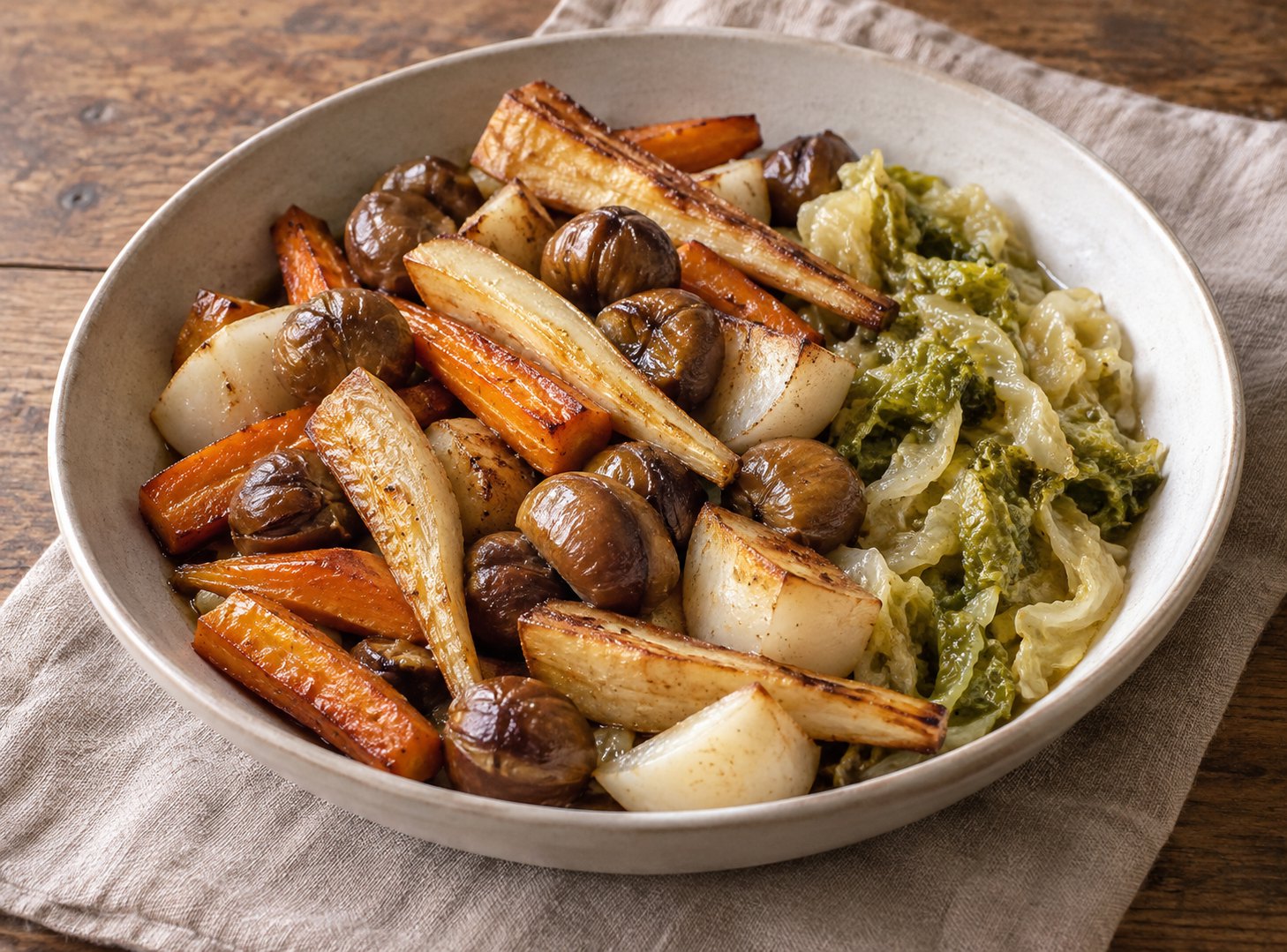
Finished dish: Roast Roots, Chestnuts & Savoy Cabbage
Day 1 · Lunch · 50 min

Roast Roots, Chestnuts & Savoy Cabbage

Traditional TCM food functionCooked roots and chestnuts illustrate gentle, warming nourishment for the Spleen in TCM. Turnip and cabbage keep the plate lighter.

Ingredients & method

Ingredients for 2

  • 300 g parsnips
  • 300 g carrots
  • 180 g cooked, peeled sweet chestnuts
  • 250 g savoy cabbage
  • 200 g white turnip
  • 150 ml water

Method

  1. Heat oven to 200 C. Cut parsnips and carrots into batons; roast on parchment for 25 minutes, turning once.
  2. Add cooked chestnuts to the tray for the final 10 minutes.
  3. Simmer sliced turnip in a little water for 12-15 minutes. Steam shredded cabbage for 5-7 minutes. Serve together.
Check before serving

Avoid for known chestnut allergy. If taking warfarin, keep cabbage intake consistent rather than cutting it out suddenly.

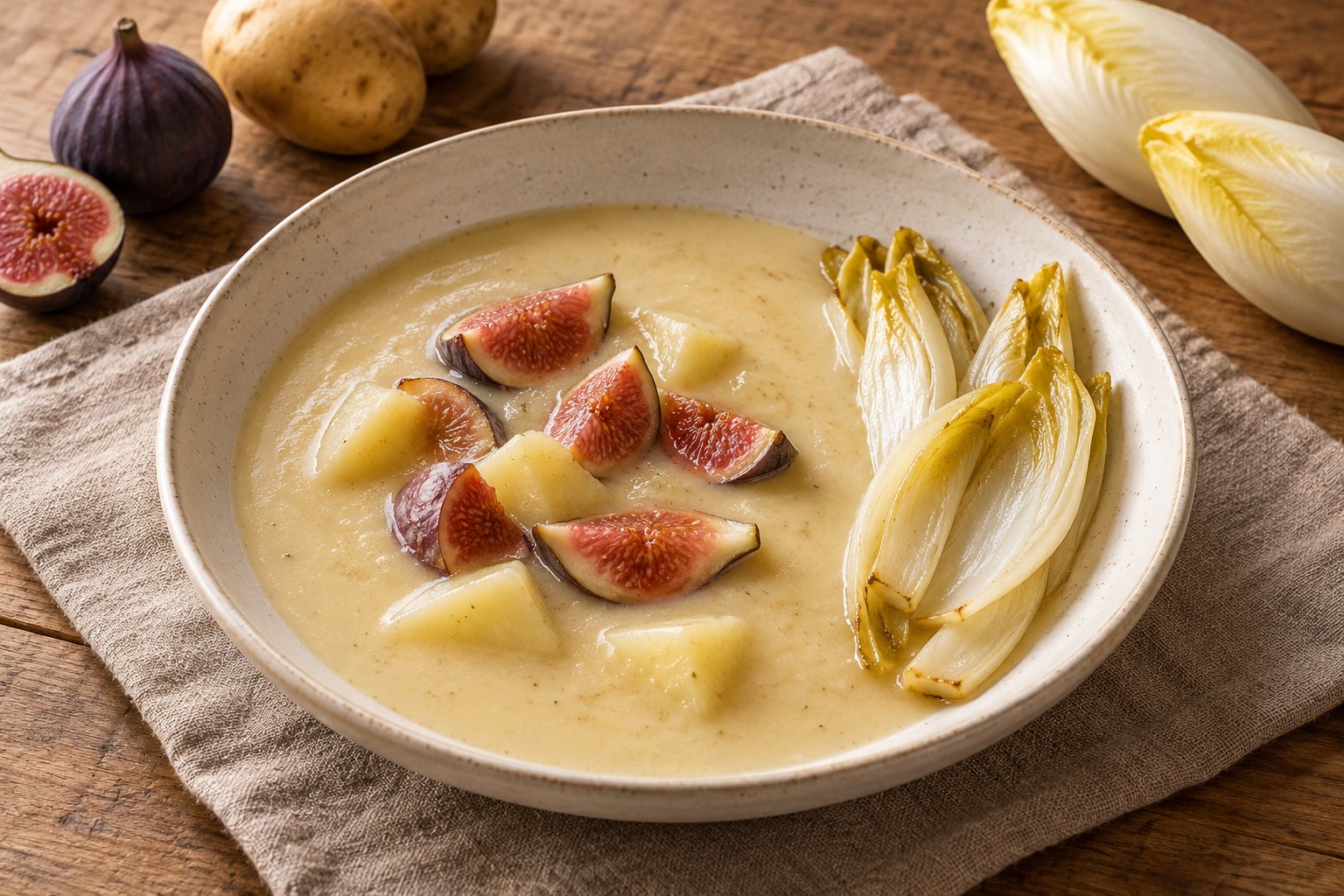
Finished dish: Fig & Potato Soup with Chicory
Day 1 · Light Dinner · 35 min

Fig & Potato Soup with Chicory

Traditional TCM food functionFresh fig is traditionally associated with moistening dryness. Potato gives body to the soup; a small chicory portion balances its sweetness.

Ingredients & method

Ingredients for 2

  • 300 g waxy potatoes
  • 3 ripe fresh figs
  • 1 small shallot
  • 1 chicory/endive head
  • 700 ml water

Method

  1. Dice potato and shallot; simmer in water for 18-20 minutes until soft.
  2. Add two chopped figs and cook 5 minutes; blend until smooth.
  3. Steam halved chicory for 5-7 minutes. Divide soup between bowls; top with the remaining sliced fig and serve chicory alongside.
Check before serving

Fresh figs and shallot can trigger IBS symptoms. Check tolerance before serving; keep the chicory portion small for sensitive digestion.

02 / 04

Day 2

Breakfast · Lunch · Light dinner

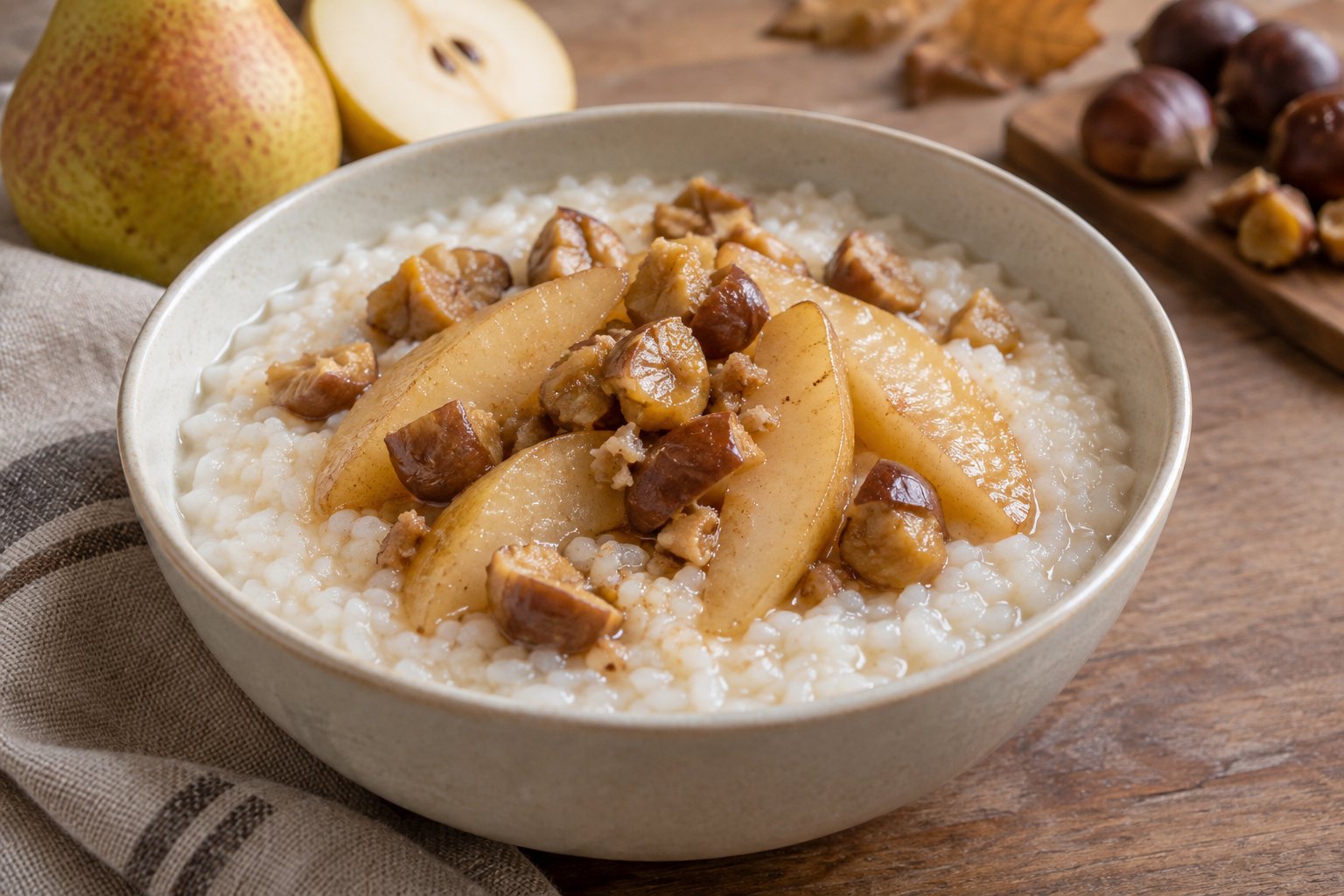
Finished dish: Stewed Pear & Chestnut Rice Congee
Day 2 · Breakfast · 40 min

Stewed Pear & Chestnut Rice Congee

Traditional TCM food functionPear is traditionally associated with supporting fluids during autumn dryness. Small portions of chestnut add warmth and substance.

Ingredients & method

Ingredients for 2

  • 100 g white rice
  • 2 European pears, cored and sliced
  • 70 g cooked, peeled sweet chestnuts
  • 850 ml water

Method

  1. Rinse white rice. Simmer it in 730 ml water for 30-35 minutes, stirring occasionally until soft and soupy.
  2. Simmer pear in the remaining 120 ml water for 8-10 minutes. Warm chopped cooked chestnuts with pear for the final 2 minutes.
  3. Divide warm rice congee between bowls and add pear and chestnuts.
Check before serving

Pears may trigger IBS symptoms. Avoid chestnuts with a known chestnut allergy; ask about prior reactions in guests with latex allergy.

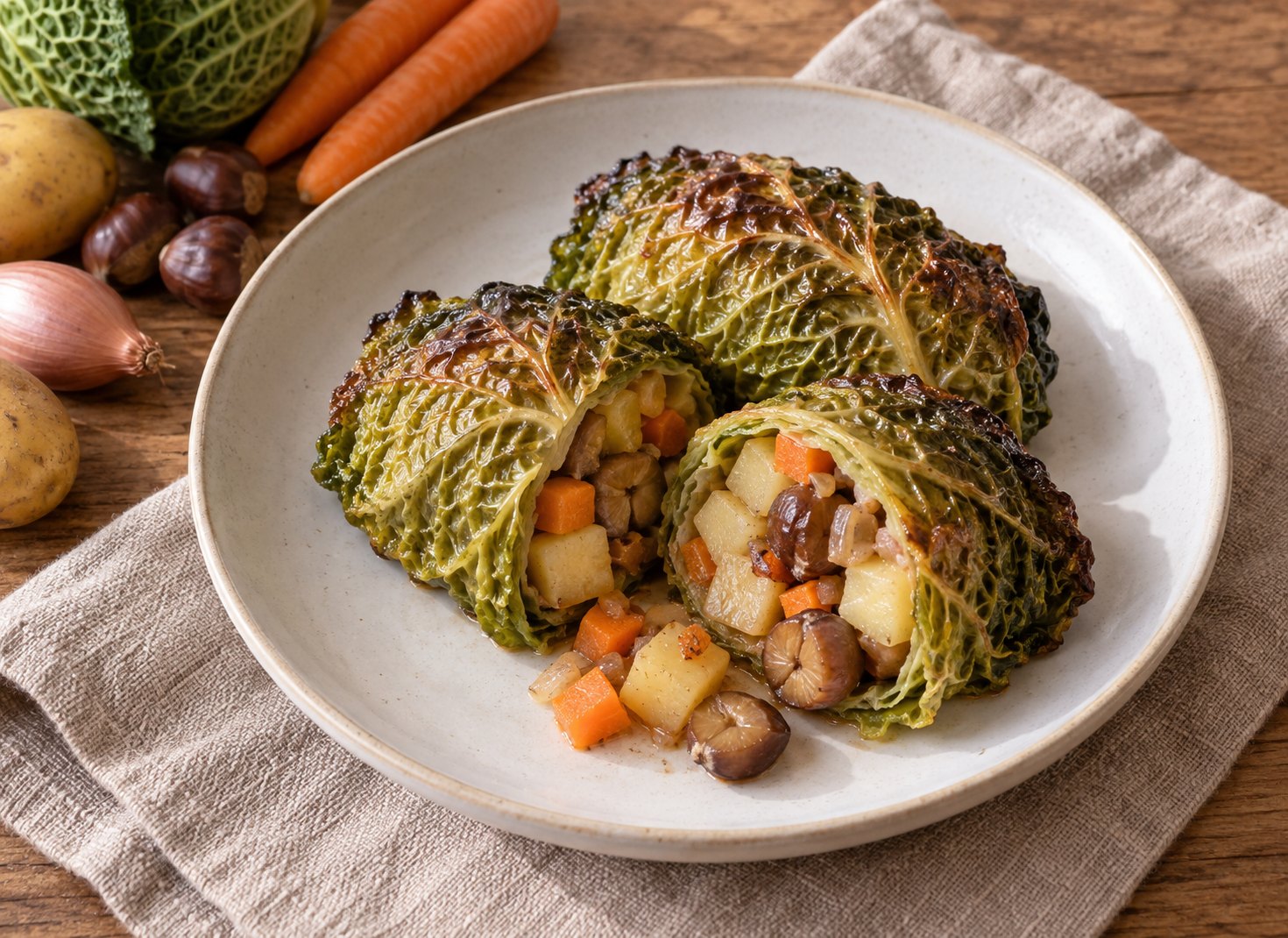
Finished dish: Savoy Cabbage Parcels with Potato & Chestnut
Day 2 · Lunch · 55 min

Savoy Cabbage Parcels with Potato & Chestnut

Traditional TCM food functionWarm cooked roots and chestnuts are traditionally used for gentle Spleen support. Steamed cabbage keeps this meal moderate rather than rich.

Ingredients & method

Ingredients for 2

  • 6 large savoy cabbage leaves
  • 350 g waxy potatoes
  • 180 g carrots
  • 150 g cooked, peeled sweet chestnuts
  • 1 shallot
  • 150 ml water

Method

  1. Blanch cabbage leaves for 3 minutes; cool and trim thick ribs.
  2. Boil diced potato and carrot for 12-15 minutes. Drain and mix with chopped chestnuts and finely diced shallot.
  3. Divide filling among leaves and roll firmly. Set seam-down in a covered pan with 150 ml water; steam 15-18 minutes.
Check before serving

Avoid with known chestnut allergy. Shallot can trigger IBS symptoms. Guests taking warfarin should keep cabbage intake consistent.

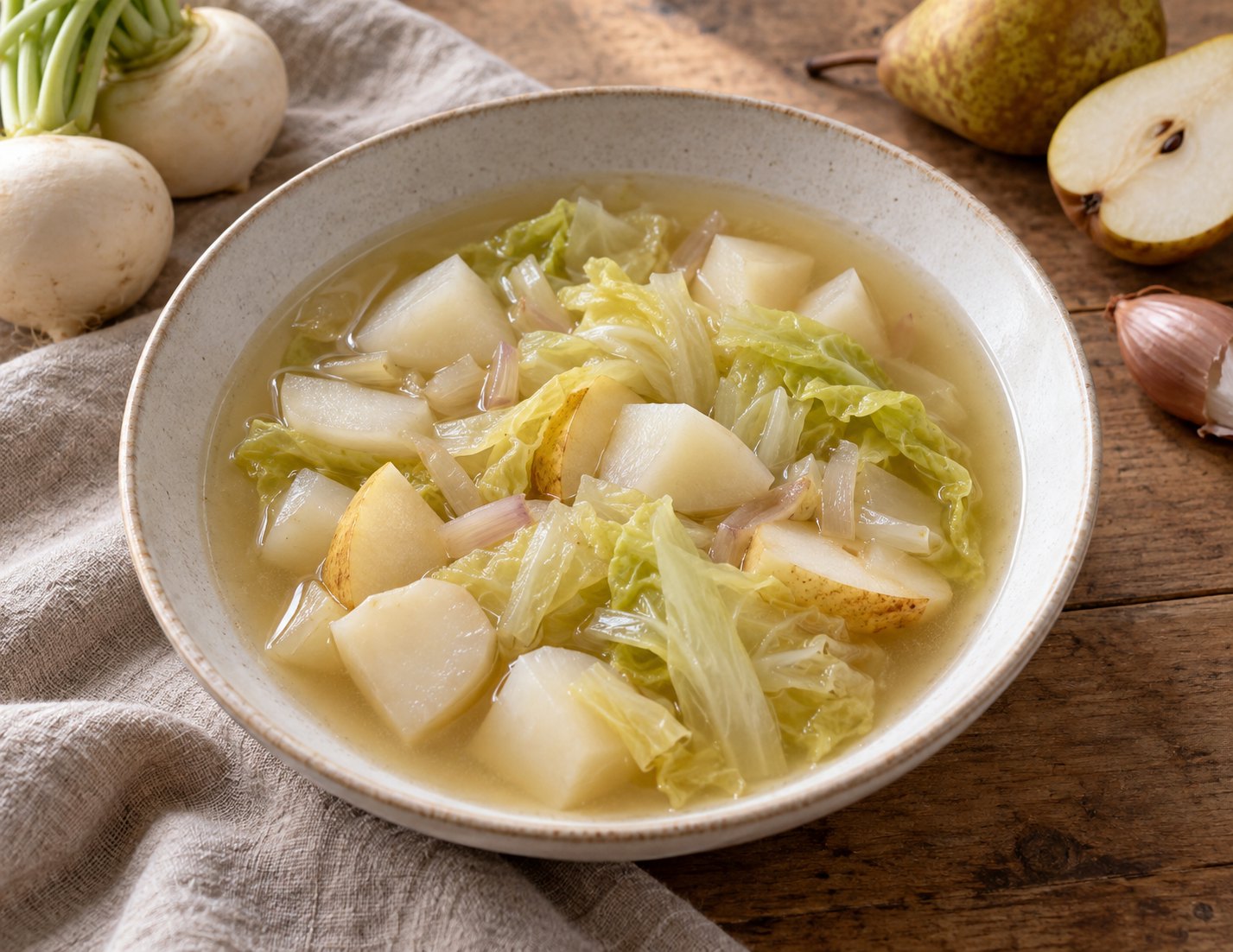
Finished dish: White Turnip, Cabbage & Pear Broth
Day 2 · Light Dinner · 30 min

White Turnip, Cabbage & Pear Broth

Traditional TCM food functionCooked pear adds a moistening theme; turnip is traditionally used to help Qi move. A clear broth makes a light evening course.

Ingredients & method

Ingredients for 2

  • 300 g white turnip
  • 220 g savoy cabbage
  • 1 firm European pear
  • 1 small shallot
  • 800 ml water

Method

  1. Slice turnip and shallot; simmer in water for 15 minutes.
  2. Add thin cabbage ribbons and pear wedges. Simmer 8-10 minutes until just tender.
  3. Serve warm with pieces of each ingredient in the broth.
Check before serving

Pear and shallot can trigger IBS symptoms. For warfarin users, keep cabbage portions consistent with their usual diet.

03 / 04

Day 3

Breakfast · Lunch · Light dinner

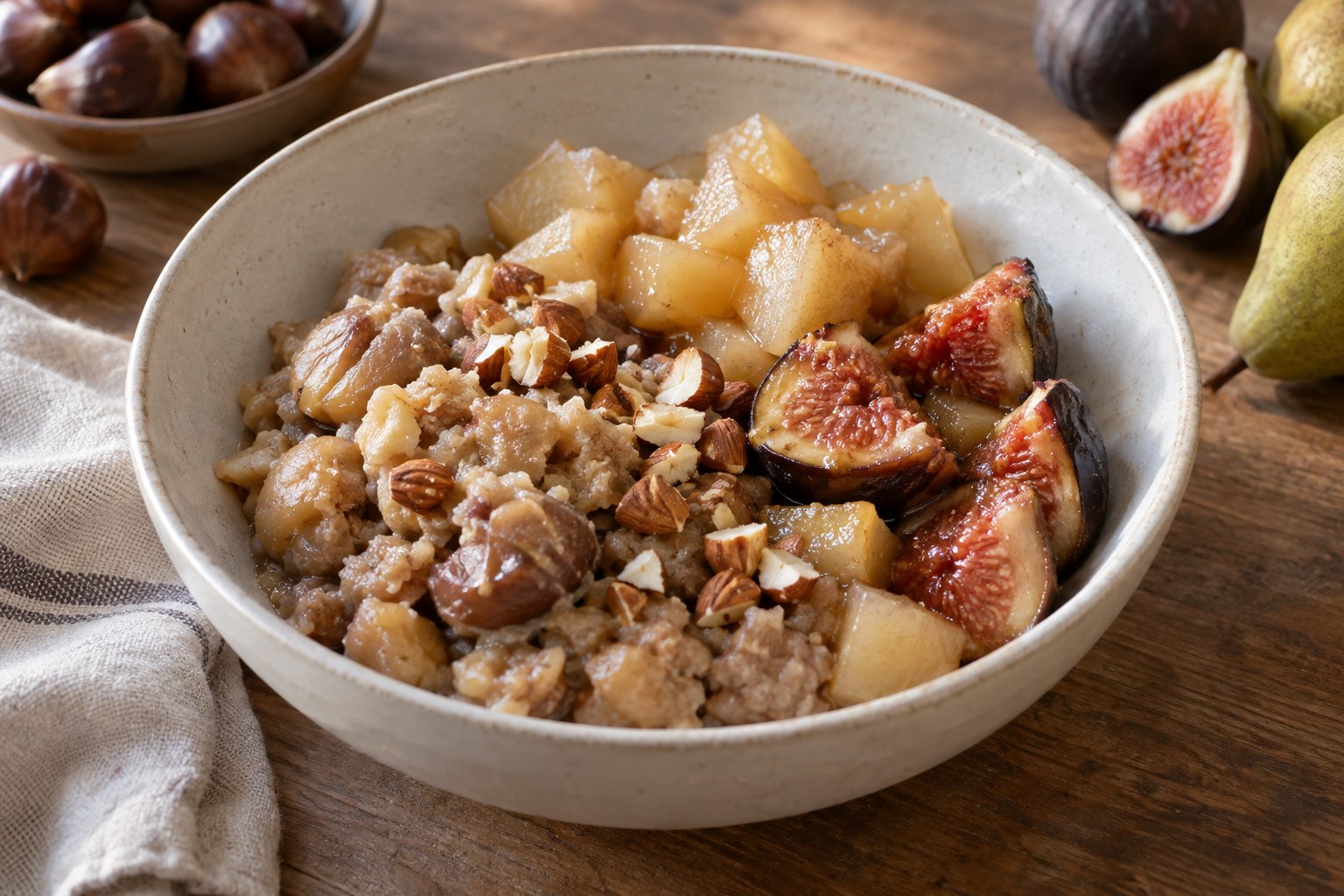
Finished dish: Warm Fig, Pear & Chestnut Bowl
Day 3 · Breakfast · 20 min

Warm Fig, Pear & Chestnut Bowl

Traditional TCM food functionFig and pear bring the autumn moistening theme; a moderate portion of cooked chestnuts gives warmth and substance.

Ingredients & method

Ingredients for 2

  • 160 g cooked, peeled sweet chestnuts
  • 3 fresh figs
  • 1 European pear
  • 20 g sweet almonds, chopped
  • 150 ml water

Method

  1. Dice the pear and simmer in water for 8-10 minutes until soft.
  2. Mash half the cooked chestnuts lightly; warm all chestnuts with pear for 3 minutes. Quarter the figs and warm for the final 2 minutes.
  3. Divide between bowls and finish with chopped sweet almonds.
Check before serving

Avoid for almond or chestnut allergy. Fig and pear may trigger IBS symptoms; ask about prior chestnut reactions with latex allergy.

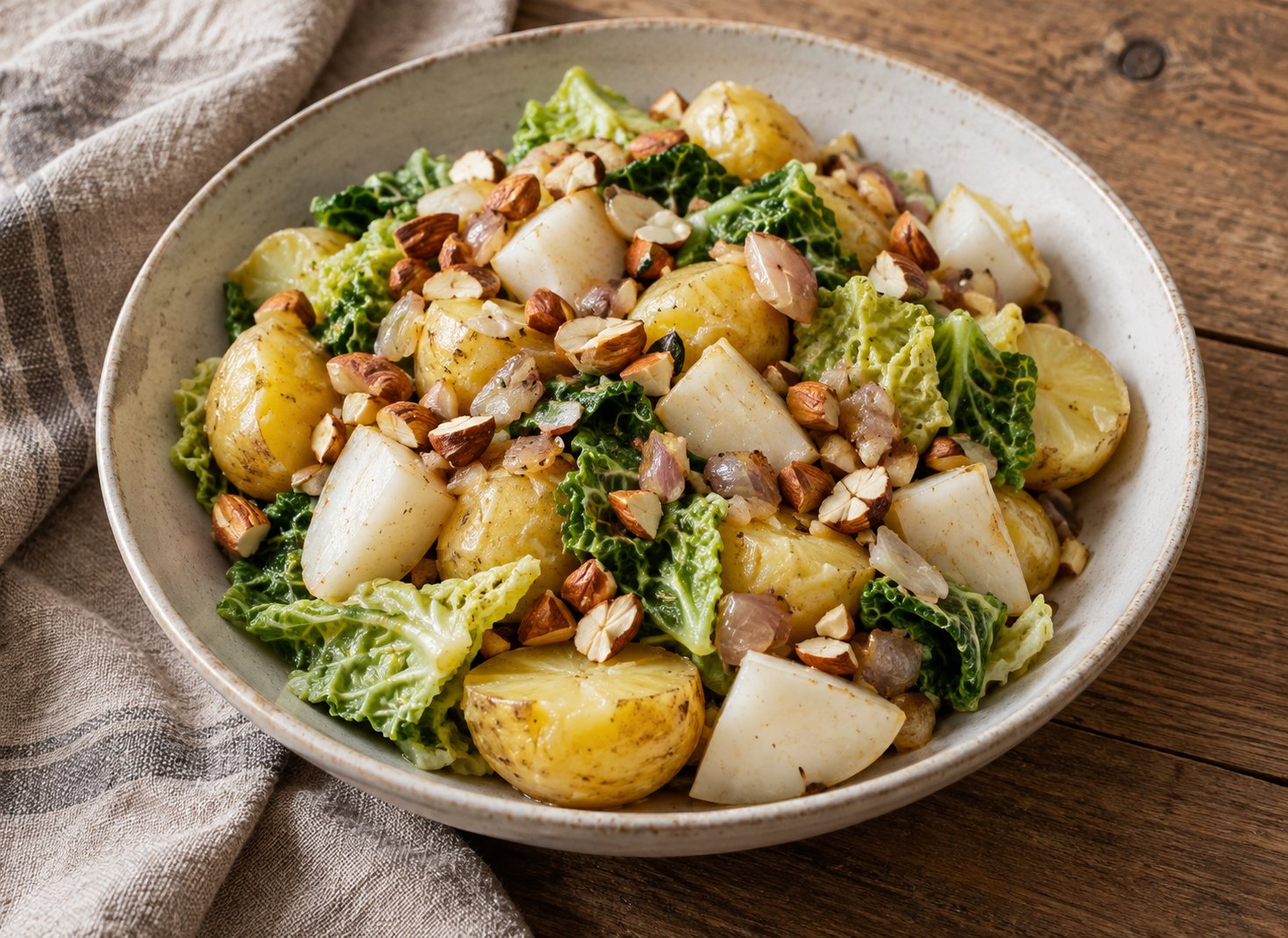
Finished dish: Potato, Turnip & Cabbage with Almonds
Day 3 · Lunch · 40 min

Potato, Turnip & Cabbage with Almonds

Traditional TCM food functionPotatoes and cooked cabbage offer a substantial warm base. Turnip adds a mildly moving quality in traditional TCM food language.

Ingredients & method

Ingredients for 2

  • 500 g waxy potatoes
  • 280 g white turnip
  • 300 g savoy cabbage
  • 50 g sweet almonds, chopped
  • 1 shallot
  • 150 ml water

Method

  1. Boil potatoes until tender, about 18-22 minutes. In a separate pan simmer diced turnip for 12 minutes.
  2. Soften chopped shallot in a splash of water; add shredded cabbage and cook covered for 6-8 minutes.
  3. Drain potatoes and turnip, combine with cabbage, and top with chopped almonds.
Check before serving

Avoid for almond allergy. Shallot may trigger IBS symptoms. Warfarin users should keep cabbage intake consistent.

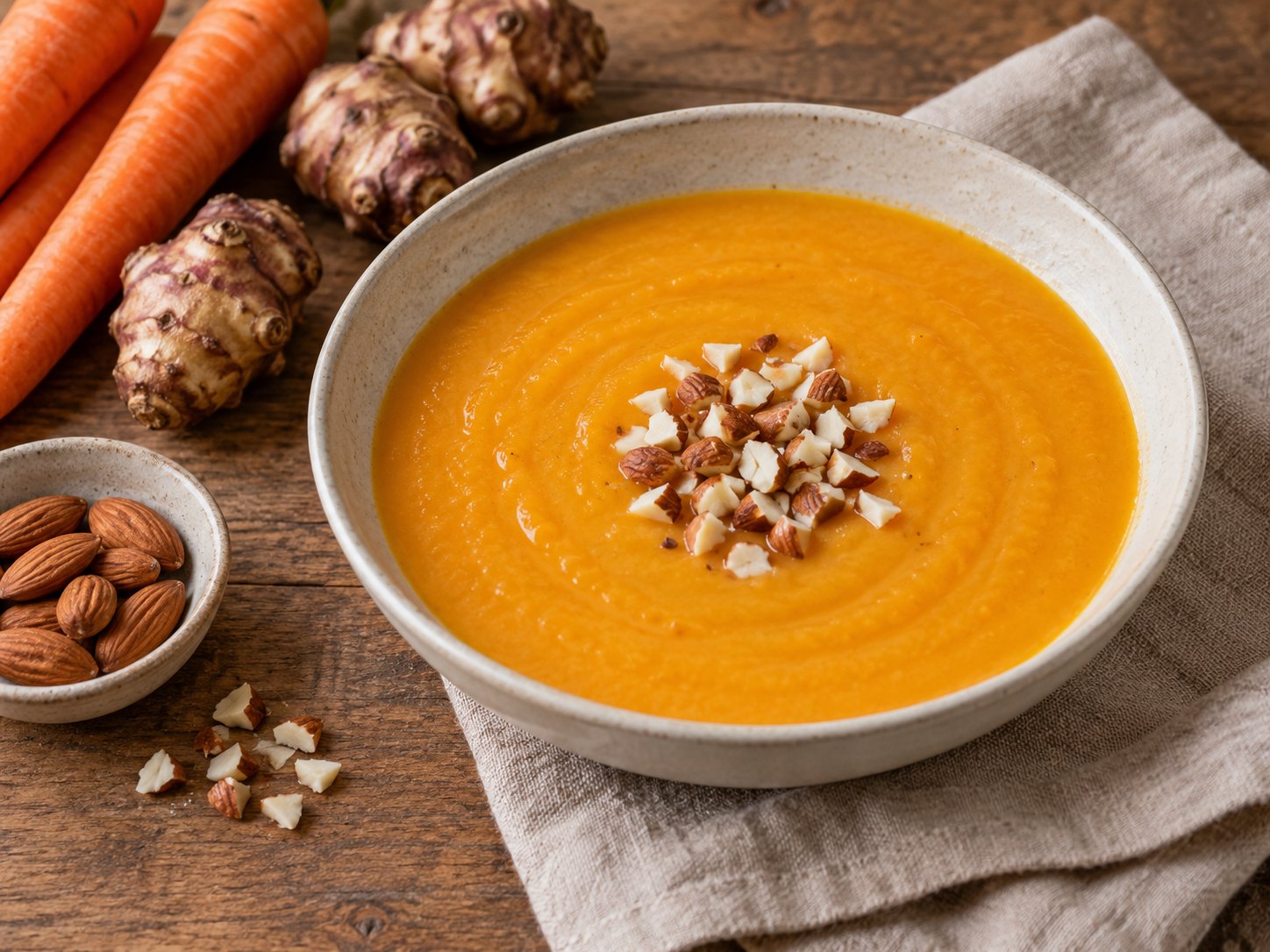
Finished dish: Carrot & Jerusalem Artichoke Soup
Day 3 · Light Dinner · 35 min

Carrot & Jerusalem Artichoke Soup

Traditional TCM food functionA warm vegetable soup supports the gentle autumn meal pattern. Use Jerusalem artichoke sparingly: its fermentable fibre may cause gas.

Ingredients & method

Ingredients for 2

  • 320 g carrots
  • 130 g Jerusalem artichoke
  • 1 shallot
  • 20 g sweet almonds, chopped
  • 750 ml water

Method

  1. Scrub and dice carrots and Jerusalem artichoke. Simmer with chopped shallot in water for 20-25 minutes.
  2. Blend until smooth, adding a little hot water if needed.
  3. Serve warm and finish with chopped almonds. Start with a small portion if Jerusalem artichoke causes bloating.
Check before serving

Jerusalem artichoke can cause gas or bloating, especially with IBS; omit it if previously poorly tolerated. Avoid almonds for almond allergy.

04 / 04

Day 4

Breakfast · Lunch · Light dinner

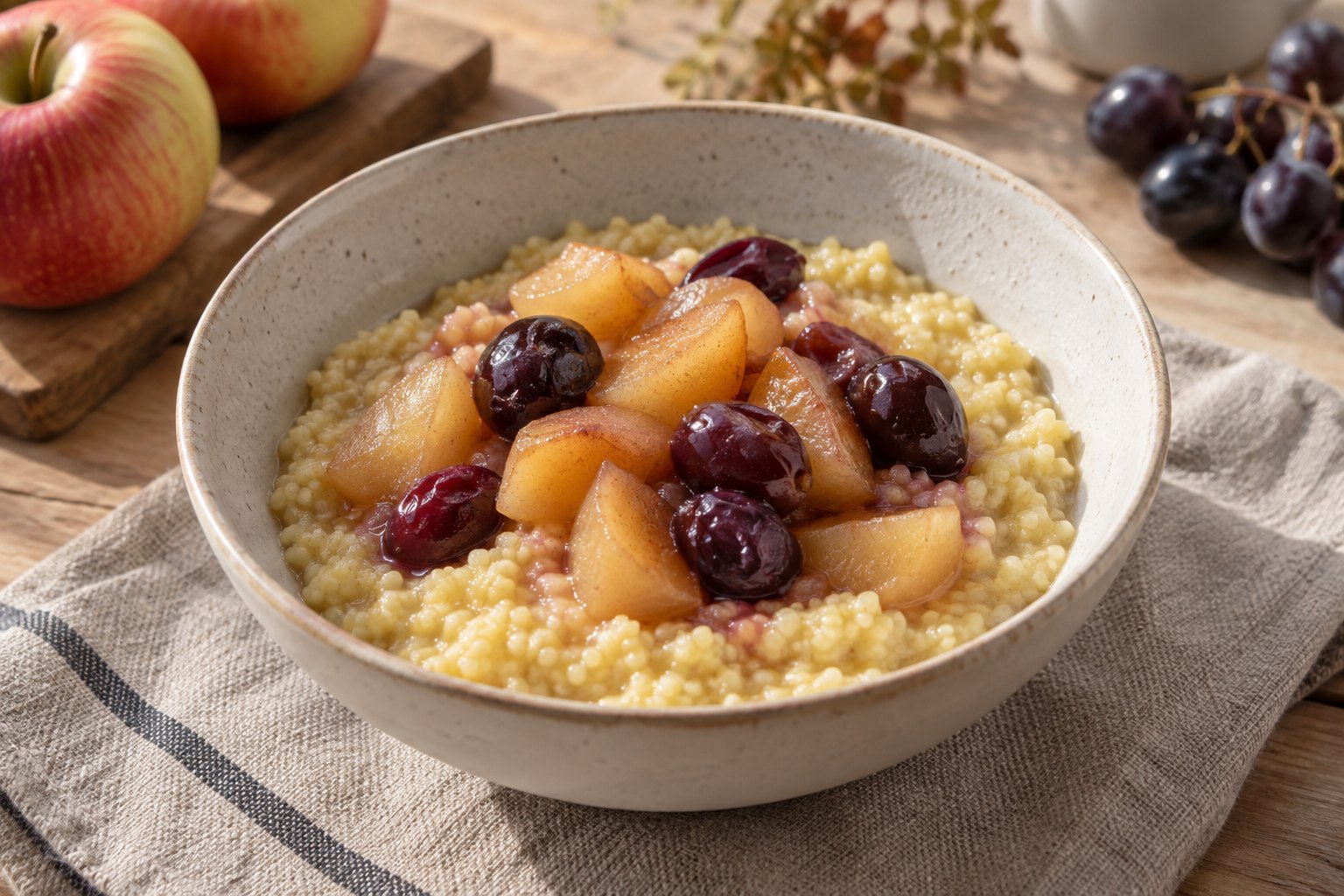
Finished dish: Stewed Apple & Grape Millet
Day 4 · Breakfast · 25 min + optional soak

Stewed Apple & Grape Millet

Traditional TCM food functionCooked fruit offers a softer way to include autumn produce. Keep the grape portion modest to avoid an overly sweet breakfast.

Ingredients & method

Ingredients for 2

  • 100 g millet
  • 1 large apple
  • 100 g dark table grapes, halved
  • 700 ml water

Method

  1. Rinse millet well. For softer texture, soak in 300 ml of the measured water overnight in the refrigerator.
  2. Simmer millet with its soaking water and 300 ml more water for 20-25 minutes. Separately simmer diced apple in the remaining 100 ml water for 10 minutes; add grapes for the final 2 minutes.
  3. Serve the cooked fruit over warm millet.
Check before serving

Apple may trigger IBS symptoms even when cooked. Offer a different breakfast for guests who avoid high-FODMAP fruit.

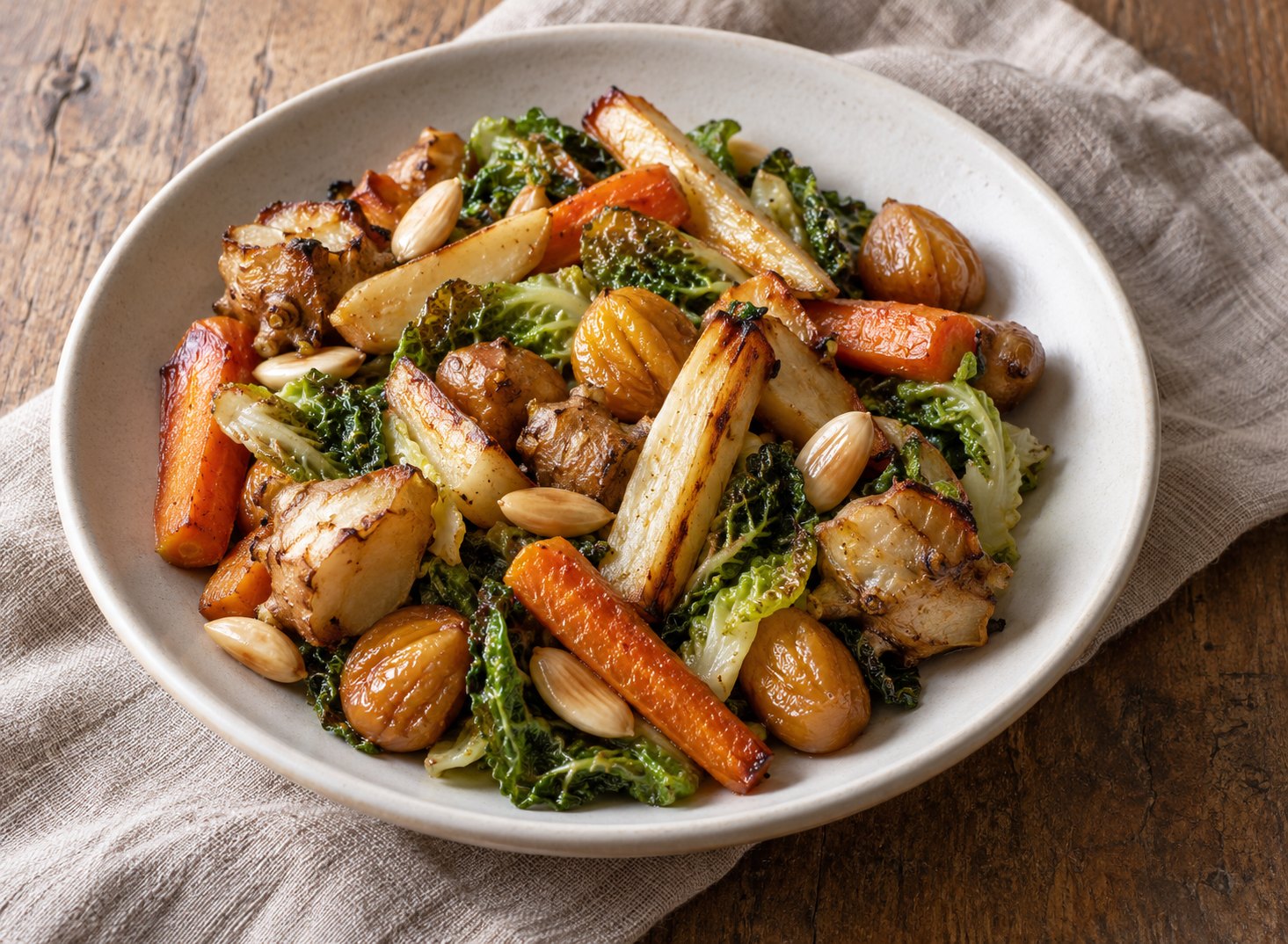
Finished dish: Roast Autumn Roots with Chestnuts
Day 4 · Lunch · 50 min

Roast Autumn Roots with Chestnuts

Traditional TCM food functionRoasted roots and a modest serving of chestnuts give a warm, substantial lunch. Cabbage balances the denser ingredients.

Ingredients & method

Ingredients for 2

  • 230 g Jerusalem artichoke
  • 250 g parsnips
  • 250 g carrots
  • 160 g cooked, peeled sweet chestnuts
  • 260 g savoy cabbage
  • 30 g sweet almonds

Method

  1. Heat oven to 200 C. Cut the three roots into even pieces and roast on parchment for 30-35 minutes.
  2. Add cooked chestnuts for the last 10 minutes. Steam cabbage for 5-7 minutes.
  3. Serve roots and chestnuts over cabbage with chopped almonds. Offer a smaller Jerusalem artichoke portion to sensitive guests.
Check before serving

Avoid for almond or chestnut allergy. Jerusalem artichoke may cause bloating; warfarin users should keep cabbage portions consistent.

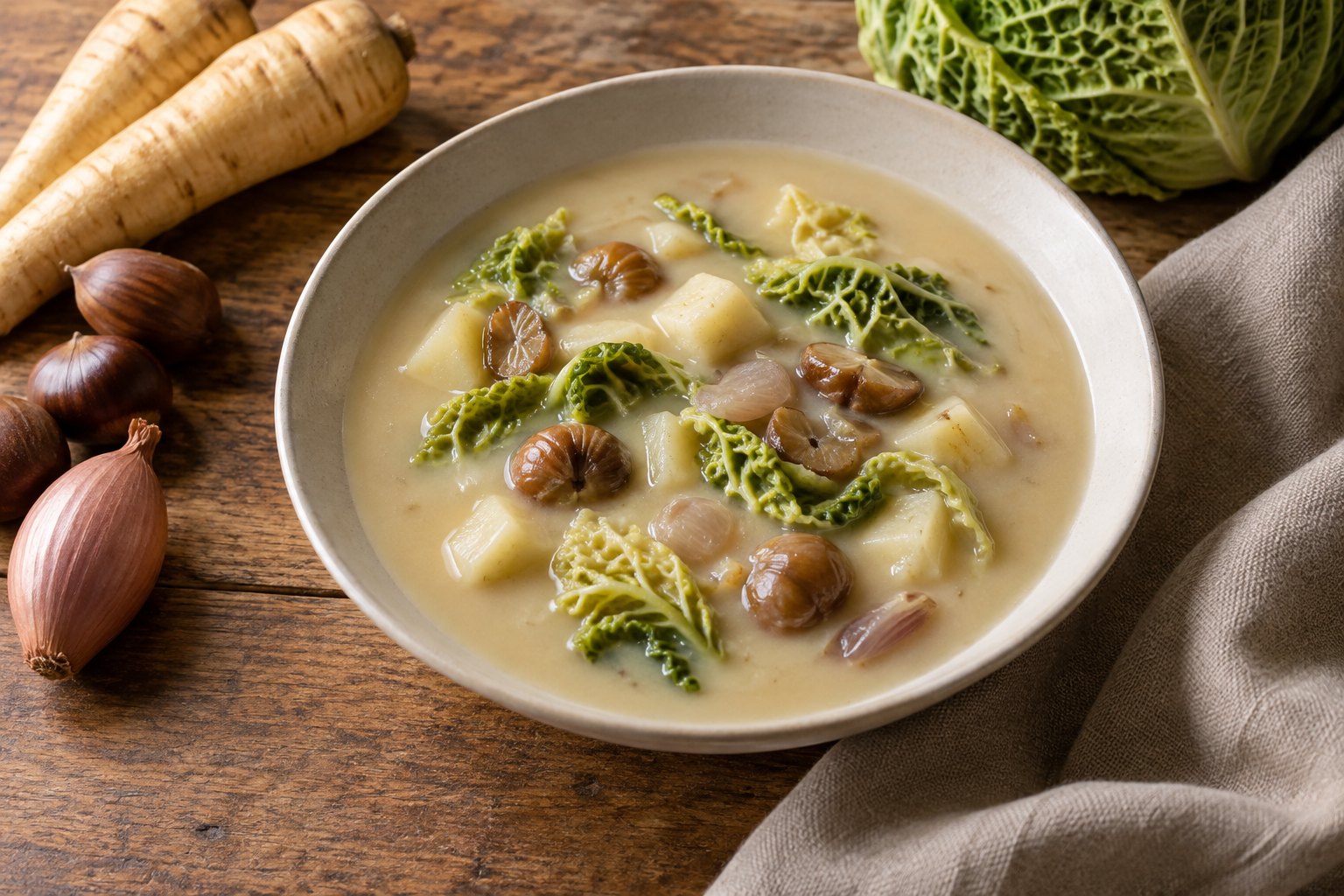
Finished dish: Parsnip & Chestnut Soup with Savoy
Day 4 · Light Dinner · 40 min

Parsnip & Chestnut Soup with Savoy

Traditional TCM food functionChestnut and parsnip make a warming soup in traditional food practice. Cabbage and a moderate chestnut portion keep it light enough for evening.

Ingredients & method

Ingredients for 2

  • 300 g parsnips
  • 110 g cooked, peeled sweet chestnuts
  • 180 g savoy cabbage
  • 1 small shallot
  • 800 ml water

Method

  1. Dice parsnip and shallot; simmer in water for 18-20 minutes.
  2. Add chopped cooked chestnuts and cook 5 minutes; blend half the soup for a lightly creamy broth.
  3. Add finely shredded savoy cabbage and simmer 5-7 minutes until tender. Serve warm.
Check before serving

Avoid for known chestnut allergy. Shallot may trigger IBS symptoms; warfarin users should keep cabbage intake consistent.